

After a long winter, spring in St. Louis, MO, can feel like a relief, but it also brings some less welcome surprises. Soggy spots in the yard. Puddles that don’t disappear. Damp smells where there shouldn’t be any. By the time April rolls in, those wet patches can start turning into real problems. That’s where a French drain comes in. It’s a simple idea that solves complicated water issues quietly and without drawing attention. If you’re already searching for a trusted french drain installer, that usually means the water has started heading where it doesn’t belong. Here’s why choosing this time of year makes the most sense, and how French drains can make your yard feel sturdy and safe again before summer heat sets in.
How Water Builds Up in Yards Each Spring
Every spring, we see the same pattern play out across many yards. Snow melts, storms move in, and the ground struggles to keep up. That combination creates the perfect mix for drainage issues to show up, especially when the soil hasn’t had a chance to dry out yet.
- Yards that slope toward the house will naturally pull water right up to the foundation
- Soil that was packed too tightly during construction leaves no space for water to move
- Gutters that overflow or downspouts that stop short lead rainwater into low spots rather than guiding it away
When water sits too long, it starts to wear down the structure of a lawn. It softens the earth, pushes against walls, and seeps into places it shouldn’t. Over time, that damage adds up. That’s why long-term drainage issues can cause more than just standing water, they can shift the ground under your home. As soil becomes saturated, it loses its ability to support grass and plants. Roots rot, and the grass thins out, leaving patches of bare ground. Even small dips or uneven spots in the yard can turn into muddy areas where nothing grows.
These problems don’t always show up overnight. Sometimes, it starts as a small puddle after storms, which sticks around a little longer each time it rains.
What Is a French Drain and How Does It Work?
A French drain is one of those things that works in the background, and that’s the whole point. It solves water problems by moving the problem underground.
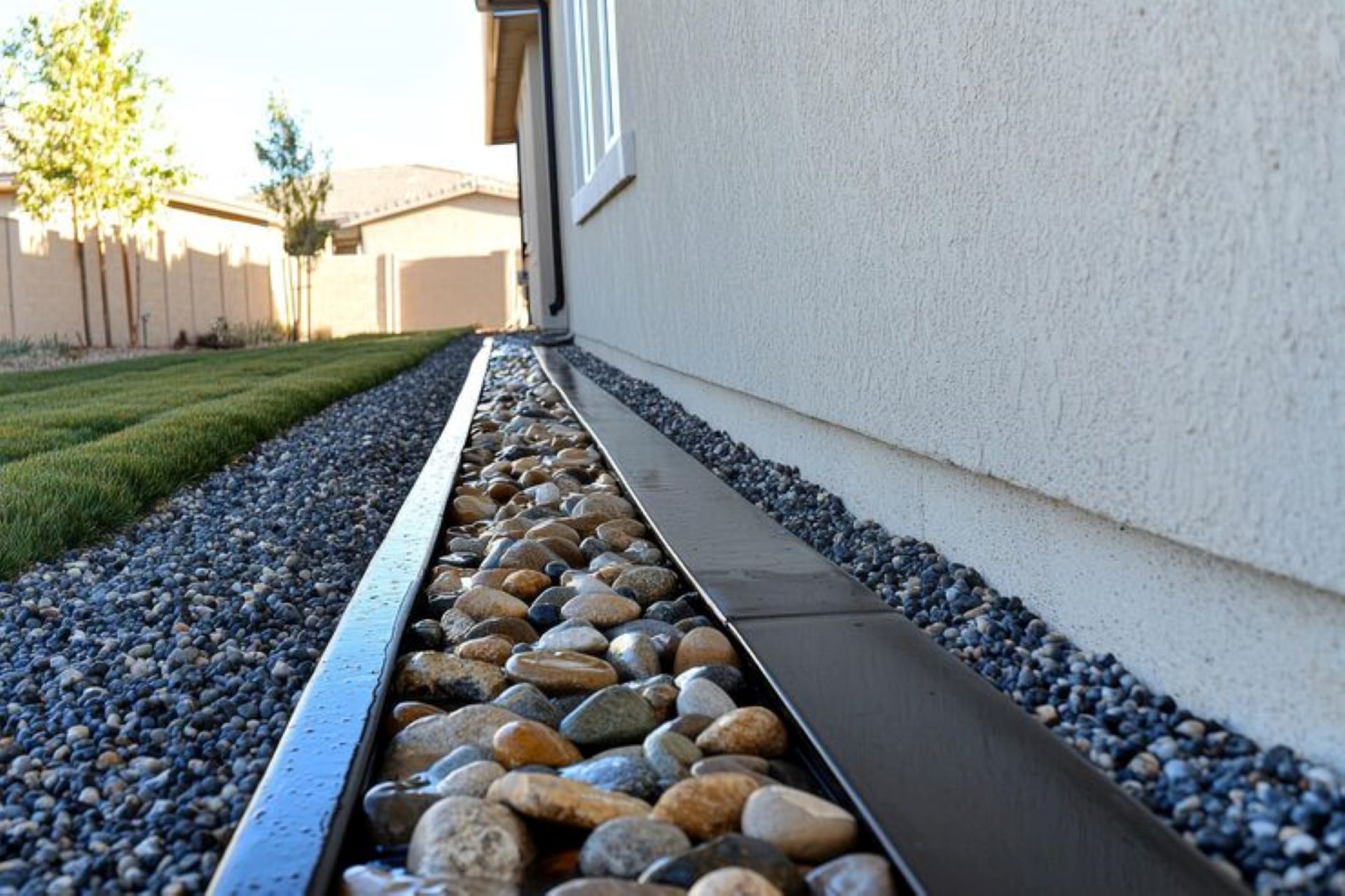
A French drain looks simple on the surface. It usually starts as a narrow trench filled with gravel and a perforated pipe. That pipe collects water from the surrounding soil and redirects it to a safer place, like a drainage swale or a dry well. The key is that it moves water without anyone really seeing it happen.
- It sits just below the surface, so it doesn’t change the look of your yard
- It can be installed in a straight line or curved to fit where water naturally flows
- It works best in problem areas where water collects, like near patios, driveways, or sloped lawns
The best part of a French drain is that it keeps working even when the rain keeps coming. Once it’s in place, it quietly pulls water away before it has a chance to cause damage. Gravel above the pipe helps the water trickle through, filtering out some debris and allowing clearer water to reach the pipe. It’s a system designed to last through the wettest seasons, operating silently without the need for much attention once installed.
Unlike surface drains, which can get blocked with leaves or mud, a properly installed French drain uses gravity and smart design to keep water moving away from where it shouldn’t be.
Signs Your Yard Might Be Ready for a French Drain
It’s not always easy to know whether a drainage issue is serious. After all, everyone sees puddles during a spring rain. But there are some signs that tell us the ground isn’t handling water the way it should.
- Puddles that stick around for days instead of hours
- Soft, uneven spots in the yard, even when it hasn’t rained recently
- Basements that smell musty or feel damp after storms
- Mold or mildew that keeps coming back near the base of exterior walls
These are all signs that water is doing more than just sitting on the surface. It’s getting into the ground and moving places it shouldn’t. When we show up as a french drain installer, our first step is to walk the yard and track where the water’s going. Experience helps us understand what’s happening below the surface, even when everything looks fine on top.
Pay attention to subtle changes as well. If you notice grass that appears greener and faster-growing in certain spots, it may be a sign that area gets extra moisture. On the other hand, thin grass and moss in shady corners often signal long-term wetness that won’t resolve on its own. Water lines on home foundations and shifting soil near patios or walkways indicate water is running where it shouldn’t, sinking deeper and causing possible structural concerns.
A French drain may be the best answer in these situations, especially when water seems to ignore normal fixes. With weather warming and more rain on the way, spring is the perfect time to look for these clues.
Why Spring is the Ideal Season to Act
Timing matters for drainage. Spring gives us a small window where the ground is finally workable, but the summer heat hasn’t dried it into something harder to dig.
- The soil is loose and fresh from thaw, which makes it easier to shape or reshape
- Heavy rains make drainage paths more obvious, showing where problems are starting
- Waiting too long means risking damage from summer storms or compacted ground
This is one of the few times a year where we can address issues quickly without needing to tear up big portions of the yard or wait for drier conditions. If we act now, it’s easier to protect what’s already working and fix what isn’t before the next weather shift.
Spring rain helps reveal parts of your yard that tend to hold water. Installing a French drain at this time means adjustments can be made easily. Grass and plants bounce back faster after work in the spring compared to later in the year when extreme heat might cause stress. By solving problems now, you’re also reducing the risk of erosion and minimizing damage to landscaping features.
Tackling drainage too late can lead to bigger headaches. Soil that has dried and compacted after many hot days is much harder to work with. Correcting problems becomes more expensive and disruptive later in the summer. Spring truly is the best window for these fixes.
Choosing the Right Help for the Job
Every yard has its own way of shedding water, or hanging onto it. That’s why no two systems look exactly the same. Experience tells us that what worked next door might not be enough across the fence.
It starts with knowing how to read a yard. How water flows, where it gathers, and what sits just beneath the soil line. From there, building the right system depends on understanding how deep to dig, which direction water should move, and where to send it once it’s collected.
A signature offering from Drainage Team is our custom French drain installation, which includes precision trenching, high-quality perforated pipe, and advanced tank connections where needed. We frequently pair these systems with yard basin inlets, sump pumps, and reinforced outlets to ensure reliability during Missouri’s heaviest showers. Our team specializes in solutions for both residential and commercial properties throughout St. Louis, Missouri.
- Surface fixes might correct a puddle, but hidden issues need deeper answers
- Planning involves both problem solving and working in step with the yard’s natural shape
- French drains are smart tools, but only when paired with the right design and placement
That’s why this isn’t something we’d ever suggest tackling alone. Most problems stay fixed when the work matches the way a yard actually behaves year-round. Drainage work requires an eye for small details. Even the best French drain needs proper grading, the right backfill, and careful attention to how water will move after every rain. Each element should be chosen and installed to fit your yard’s exact needs. That kind of care and expertise comes from professionals who focus on drainage solutions every day.
A Smarter Yard Starts Below the Surface
Spring is a good time to look down. Not just at the surface, but at what’s happening under it. Soil shifts, water flows differently, and even small drainage problems can turn into larger issues as the seasons roll forward.
French drains aren’t flashy. They don’t change the look of your yard. But they do solve deep, hard-to-see problems before they get worse. When done right, they keep working in the background, keeping water moving and keeping your yard stable.
Not every soggy patch means big trouble, but when the same puddles appear again and again, it’s trying to say something. Listening to those signs now means fewer repairs, and fewer surprises, later in the year.
Drainage concerns don’t have to wait until they become major headaches. Spring in St. Louis, MO, is the perfect opportunity to address them before heavy rain causes lasting damage. A smart solution like a french drain installer can help redirect water and keep your yard protected for years to come. At Drainage Team, we’ll walk your property with you and recommend the right options to prevent problems before they start. Reach out today to schedule your personalized assessment.